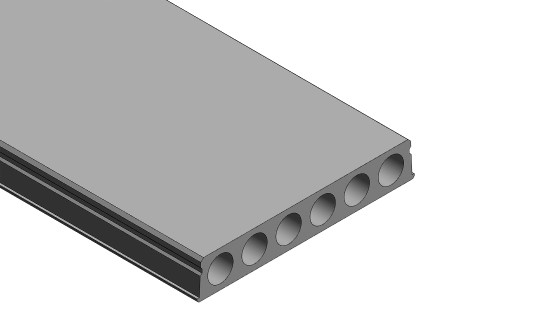
Technological development of prestressed hollowcore slabs
From wetcast to extrusion
Hardly any product represents technical precision and economic efficiency in modern construction as clearly as the prestressed hollowcore slab. It enables slim structural designs, long spans and a high level of prefabrication – key advantages at a time when efficiency and sustainability are under constant pressure.
Reaching today’s level of performance took time. The story of this technology goes back more than a century and is closely linked to the development of innovative production systems – from wetcast to slipforming and finally extrusion.
A decisive step towards industrial maturity was made by the German Weiler GmbH, which later became MAX-truder GmbH. In this article, you will learn about the history of prestressed hollowcore slabs, their technological milestones and the role German engineering has played in shaping them.
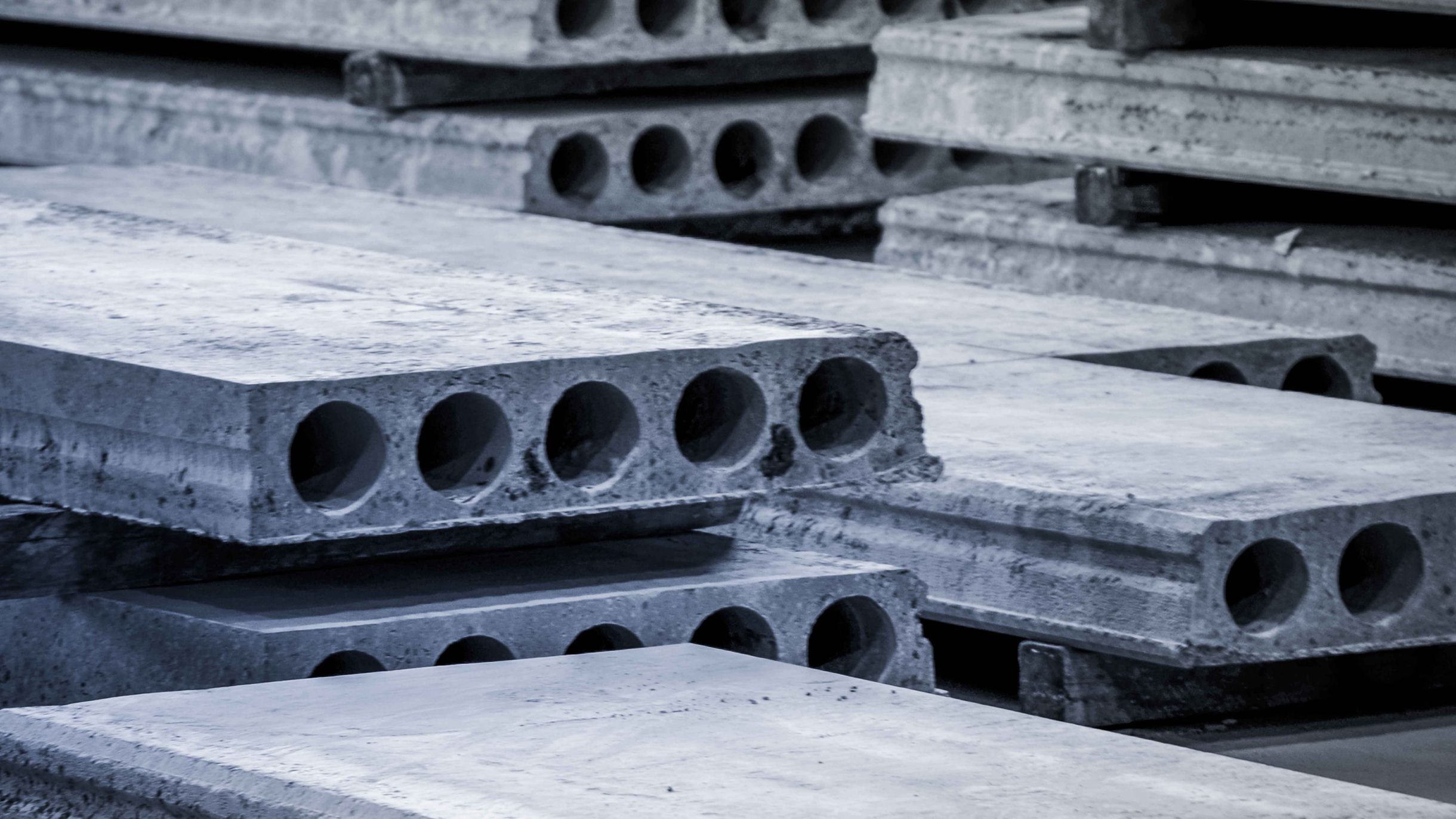
1. Wetcast – the origin of hollowcore production
Wetcast was the first method engineers used to create voids in concrete floor units in order to reduce material usage and self-weight.
In this process, void formers – typically made of steel, timber or plastic – are placed into a mould before the concrete is poured. These cores can be permanent (remaining inside the element) or temporary (removed after curing).
As early as 1906, Wilhelm Siegler in Germany experimented with tubular cores to form longitudinal voids in concrete slabs. Later, inventors such as Jules Heyneman and Walter Cobi worked with elastic or inflatable forms – early versions of lightweight construction concepts used today. (Source: Van Acker & Maas, CPI - Concrete Plant International, issue 2/2021*)
However, wetcast production was labour-intensive and time-consuming because each element had to be cast individually. Even so, it laid the foundation for hollowcore manufacturing and remained a proven solution for decades, especially for small production runs and special shapes.
Wetcast is still used today for bespoke production, for example when projects require individual spans, specific geometries or architecturally demanding concrete surfaces.
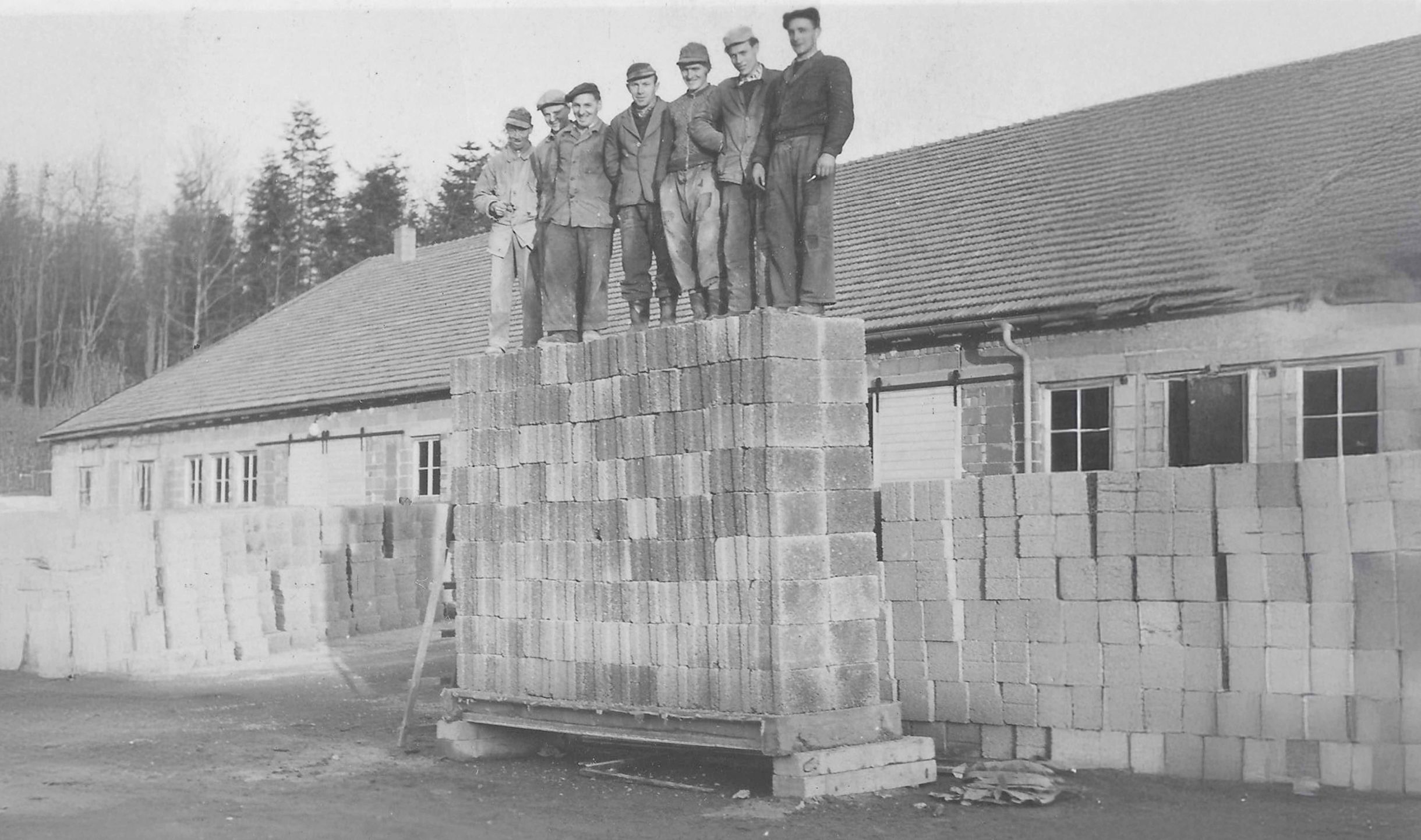
2. Slipforming – the industrial breakthrough
With the start of the 1930s, mechanised production began to shape the market. Slipforming made it possible for the first time to produce long prestressed slabs continuously on casting beds.
The principle is simple: a moving machine – the slipformer – shapes, compacts and finishes the concrete while travelling slowly along the casting bed. This allows long strands to be produced with consistent quality and then cut into individual slabs.
Two variants emerged:
-
Slipforming with tamping – concrete is compacted by mechanical plungers
-
Slipforming with vibration – vibrating plates compact the concrete, creating a more uniform structure
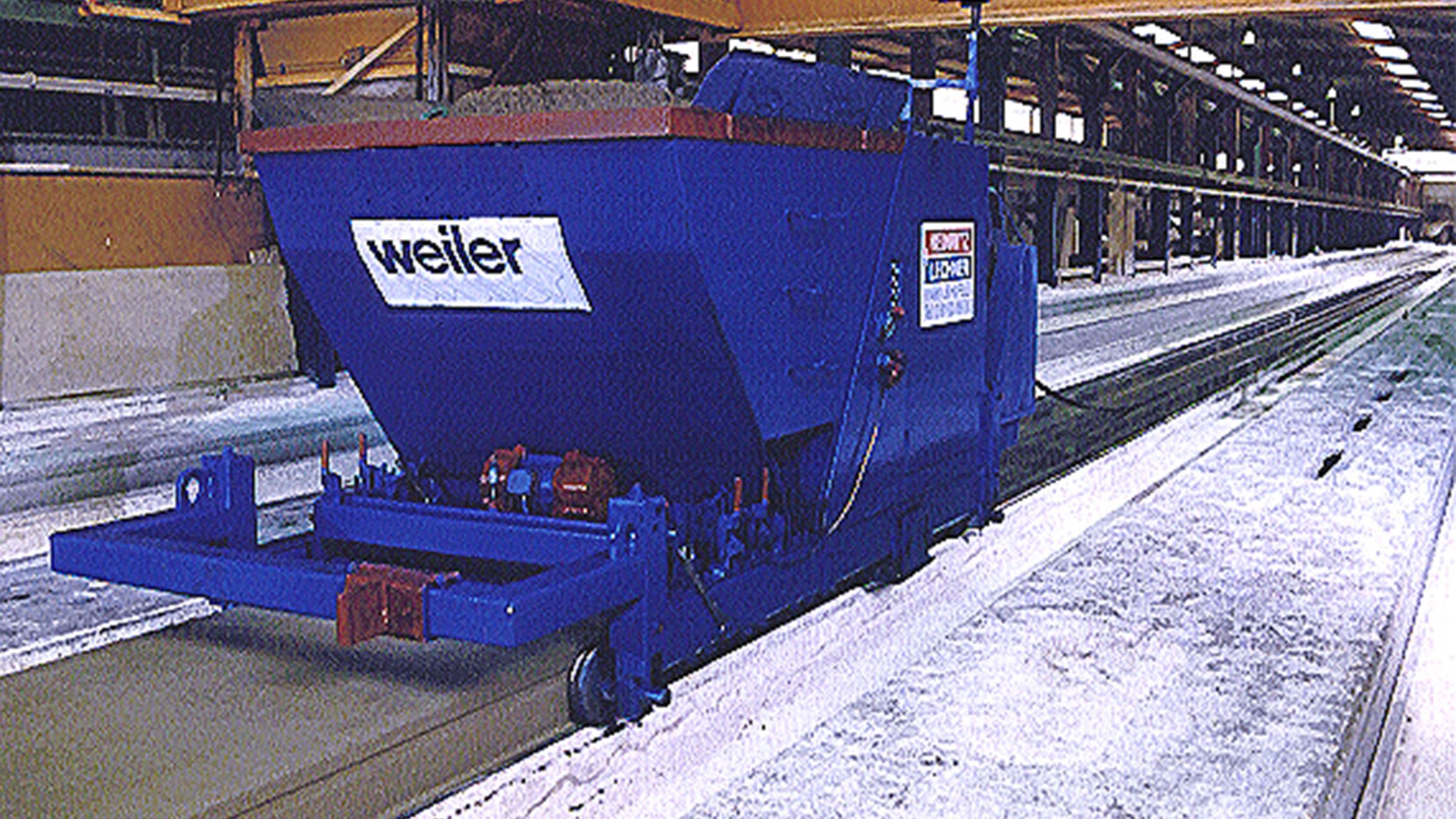
German engineer Wilhelm Schäfer was among the first to patent this method in 1931. A decisive step followed in 1957 when Weiler GmbH – today MAX-truder GmbH – introduced a vibrating slipforming machine based on the patent by Hans Geiger. (Source: Van Acker & Maas, CPI - Concrete Plant International, issue 2/2021*)
This machine led to a major change in the precast industry:
-
Uniform compaction with fewer air voids
-
High dimensional accuracy
-
Significantly higher production speed
Under the Weiler brand, the technology was exported worldwide – from Germany to Belgium and Italy and on to Scandinavia. Weiler GmbH is regarded as one of the pioneers of industrial prestressed precast production. At MAX-truder, we continue this tradition by continuously developing our machines with energy-efficient drive systems, digital controls and modular plant concepts.
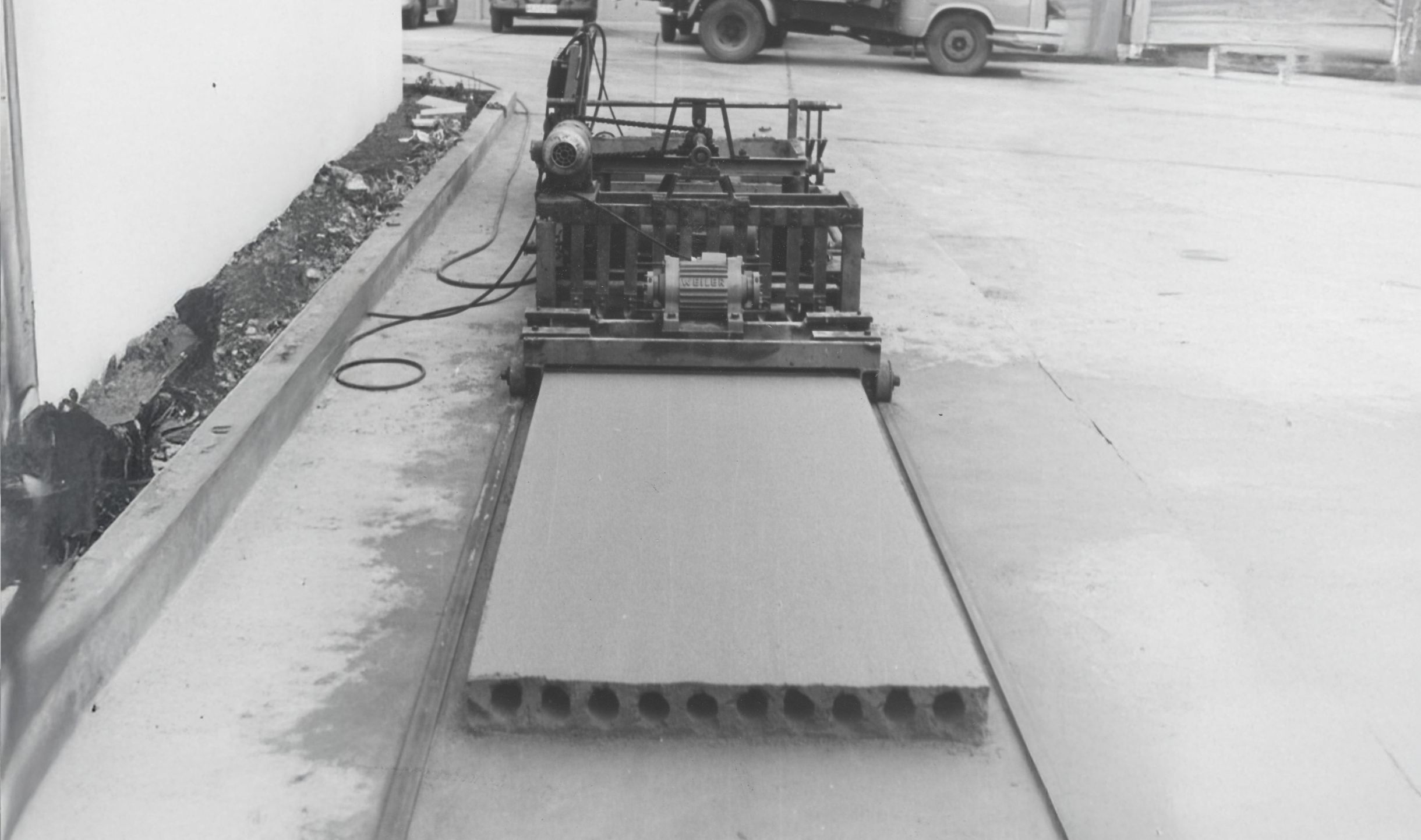
3. Extrusion – precision through pressure and technology
Extrusion opened a new chapter in hollowcore slab production in the 1960s. While slipforming relies on concrete falling into the shaping zone, extrusion presses the concrete under pressure through a forming chamber.
The basic principle is similar to a screw press: one or more augers convey very dry concrete forward and form it into a continuous slab with voids.
There are two main approaches:
-
Extrusion with high-frequency vibration – the concrete is compacted by vibration while being forced through the mould
-
Extrusion with shear compaction – compaction is achieved through the shear movement of augers and side plates, without vibration
The first extrusion machine patents came from Canadian engineers Ellis and Thorsteinson (1961) and from Glenn Booth (Spiroll Corporation, 1965). These systems improved product quality significantly and made production quieter, cleaner and more efficient. (Source: Van Acker & Maas, CPI - Concrete Plant International, issue 2/2021*)
Today, extrusion is the global standard for hollowcore slabs because it delivers high output, precise surfaces and very tight tolerances.
Modern prestressed hollowcore slabs: technology meets sustainability
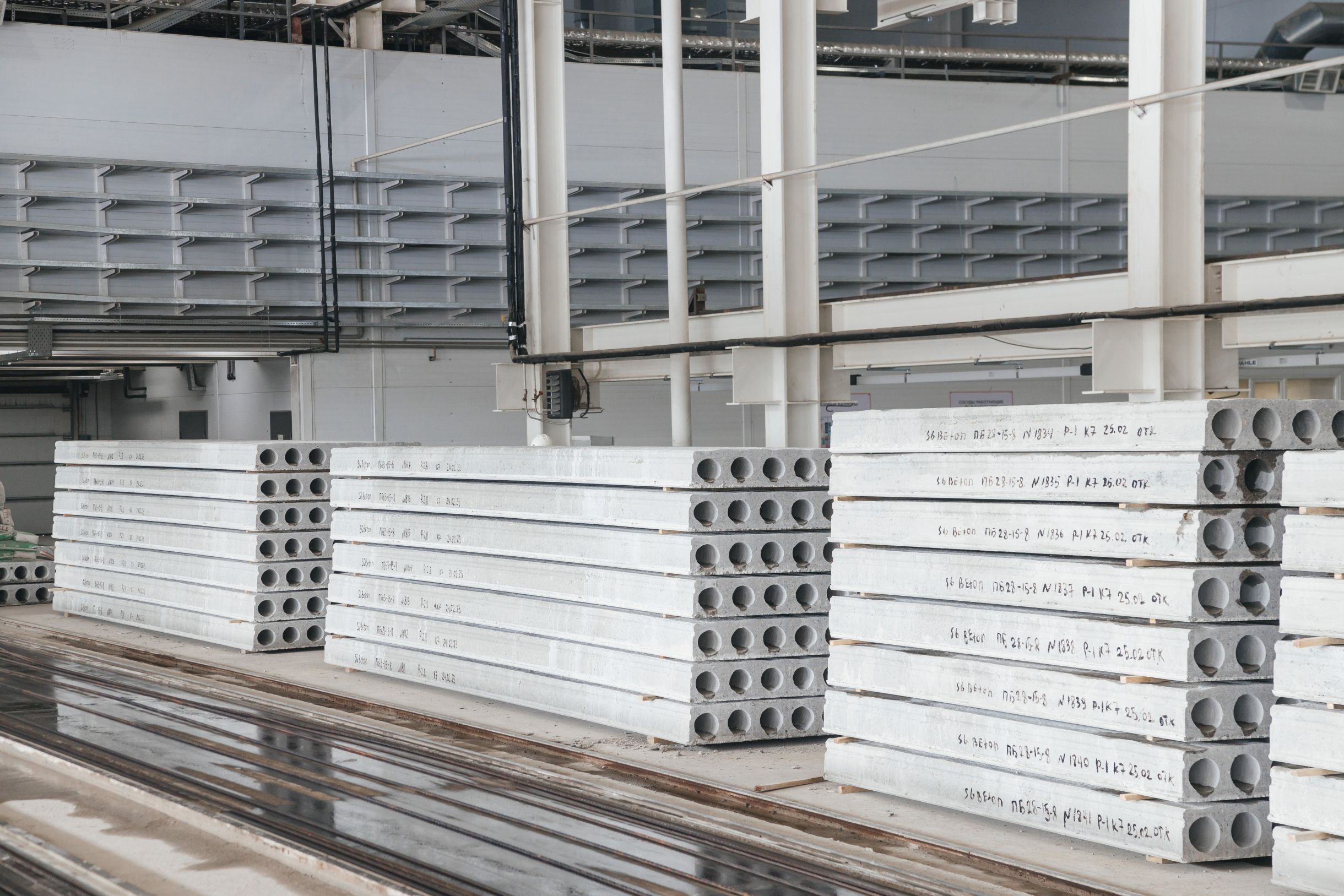
Current developments show that prestressed hollowcore slabs are far more than a proven product – they are a key element of modern sustainable construction. Precise industrial prefabrication helps conserve resources and makes processes more efficient. Each element is produced under controlled conditions, which increases quality while reducing waste and material consumption.
High dimensional accuracy and optimised production methods reduce energy demand in manufacturing as well as the effort required for transport and installation on site. Prefabrication also shortens construction time significantly – a major advantage for projects where speed and cost efficiency matter.
Improved concrete mixes and advanced prestressing systems now allow spans of more than 20 metres while maintaining low self-weight and high durability. This makes it possible to realise demanding architectural designs with a strong focus on resource efficiency.
Ongoing research and development – both in materials technology and mechanical engineering – continues to improve hollowcore slab production. The goal is to increase efficiency further, enhance safety and minimise environmental impact across the entire lifecycle.
Conclusion: three methods, one shared evolution
The history of prestressed hollowcore slabs reflects the technical progress of modern construction. From early wetcast experiments through industrial slipforming and on to precise extrusion, the trend is clear: continuous innovation and practical engineering expertise have led to more efficient and reliable production methods.
Each process has helped improve quality, cost efficiency and sustainability. Together, they form the foundation of a technology that still sets standards today for precision, material efficiency and structural performance.
This development also shows that progress in construction technology is always the result of long-term research, hands-on experience and consistent improvement – a process that will continue to shape hollowcore slab production in the future.
Source
* Parts of this article are based on “Historical development of hollow core slabs” by Arnold Van Acker and Stef Maas, published in CPI - Concrete Plant International, issue 2/2021. Read the full article here: View article.